Updated Packing List for Gorilla Safaris in Uganda and Rwanda
The Essential Documents & Permits to Carry for Gorilla Trekking Safaris
- Original passport: Must be valid for at least 6 months. This is intended to cross check the name and passport number on your physical permit against your original passport during the 7:00AM briefing to prevent permit fraud. However, these legal documents are also required for aged verification because children under the age of 15 are legally prohibited from trekking gorillas.
- Gorilla trekking permit: You will not be allowed past park headquarters without a physical copy. This is because the gorilla trekking permit acts or serves as your legal entry ticket, financial proof of payment, and official authorization to enter the national park’s protected areas. Because mountain gorillas are highly endangered, park authorities regulate access through strict, computerized permit systems to manage human impact.
- Yellow fever immunization card: Mandatory for entry into Uganda and the DRC to protect the endangered gorillas. Mountain gorillas share roughly 98% of human DNA and are highly susceptible to human viruses and airborne illnesses. Enforcing strict regional vaccination standards safeguards these fragile, isolated primate populations from catastrophic disease outbreaks.
- Local currency (cash): Useful for purchasing hand-carved gorilla sculptures, woven baskets or local honey and tipping park guides, rangers, trackers and hiring local porters. At the end of your trek, it is customary to tip your guide, armed park rangers and trackers, who cut paths through the dense jungle to locate the gorilla families. These tips must be given directly in cash as they cannot be added to a hotel bill or credit card voucher. Porters are the local community members available at the park headquarters to carry your heavy daypack and pull or push you up steep, slippery muddy slopes.
Technical Clothing & Protection Items
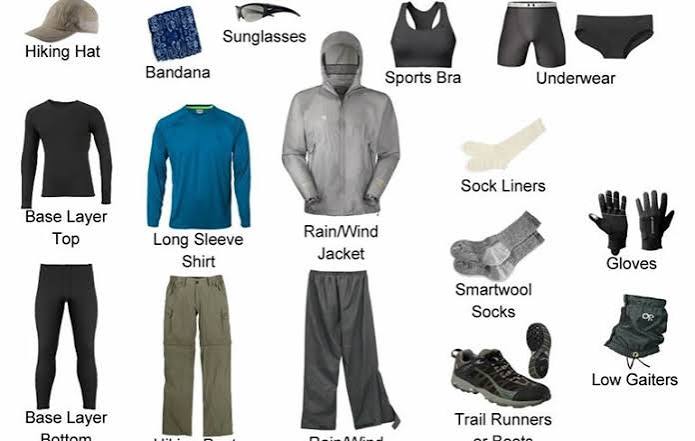
- Neutral-colored layers: Pack clothing in earthy shades like khaki, green, grey, and brown. Avoid bright neon colors which disturb the wildlife, animal prints, and dark blue or black clothing, which actively attracts biting tsetse flies. Earthly neutrals like the khaki, olive green and grey allow human tracking groups to camouflage against the dense foliage. This helps the gorillas remain calm, relaxed and behave naturally during the viewing hour. It is advisable to avoid animal prints like zebra, leopard because gorillas instinctively recognize predator patterns which can trigger an aggressive defensive response from the silver protector
- Long-Sleeved shirts & trousers: Choose lightweight, quick-dry fabrics. Long sleeves protect you from insect bites mostly tsetse flies that transmit disease like sleeping sickness, malaria carrying mosquitoes during the early morning briefings and severe scratches from sharp vines.
- Tall and thick hiking socks: Bring long socks so you can tuck your trousers into them. These help in blocking safari ants as the rainforest floor is home to aggressive biting safari ants (siafu) that travel in columns of millions. If one steps near them, they will swarm up their legs and bite simultaneously and so the safari guides will strictly instruct you to tuck your long trousers entirely inside your tall socks. This creates an impenetrable seal, preventing ants from crawling up the inside of your pant legs.
- Wide-brimmed hat: These help in deflection of the falling debris as the jungle canopy is dense with hanging vines, dropping twigs, loose bark, and insects. A wide brim prevents spiders, ants, and scratching leaves from falling down your collar or hitting your face as you cut through the brush. A water-resistant brim keeps rain out of your eyes and off your face during sudden storms, allowing you to maintain your balance on slippery, muddy slopes.
- Fleece jacket: This helps during the freezing morning briefing. Gorilla treks begin at 7:00AM at park headquarters, where high altitude mountain air creates very chilly, damp, and misty conditions. A fleece helps you warm while you wait for your group assignment. It also helps in rapid cooling after exertion because trekking involves physical exhaustions and heavy sweating. Once you locate the gorillas, you must stand still or sit in the damp shade for exactly one hour. Without a fleece to layer on, your body temperature will plummet rapidly putting you ate a risk of hypothermia.
- Moisture-wicking base layers: Helps in evaporation management. By pulling sweat away from your skin and allowing it to evaporate rapidly, a highly quality base layer helps minimize the humid microclimate around your body that draws swarming insects to you. It also helps in skin protection where a smooth, dry, technical base layer eliminates this friction, entirely preventing painful skin chafing and raw rashes.
Gear & trail items to carry;
- Waterproof daypack: This is used to carry survival essentials and foods. Park authorities require you to carry at least 20 liters of drinking water. It also helps keep your hands free for balance as the mountain terrain is exceptionally steep, muddy, and tangled with the vines and so both hands are essential to grab trees and pull yourself up volcanic ridges. Additionally it is used to protect expensive electronics and documents like cameras, zoom lenses, spare batteries, smartphones, and paper work.
- Surgical face masks: Mandatory under the International Gorilla Conservation Programme (IGCP) to protect the endangered primates from human airborne illnesses. Gorillas lack the antibodies to fight off human pathogens. Wearing a mask while in their presence creates a vital physical barrier that traps airborne droplets when you breathe, talk, or cough, preventing lethal outbreaks within the habituated groups.
- Hydration & energy snacks: Pack at least 2 liters of drinking water and high-energy food like nuts or granola bars. The trek can range anywhere from 30 minutes to over 7 hours depending on gorilla movement and so they help you manage an unpredictable timelines.
- Insect repellent & first aid: Bring a strong, DEET-based insect repellent, personal prescription medications, and malaria prevention pills. Immediate treatment for scratches, cuts and infection while on the trek. Scrambling up vertical mud slopes in rigid hiking boots causes intense friction. Having blister pads allows you to treat hot spots immediately before they open into painful wounds.
- Gaiters: Gaiters keep mud and debris entirely out of your footwear. Gorilla habitats like Bwindi Impenetrable National Park experience rain almost daily, turning the steep slopes into deep, sucking mud baths. Without gaiter, stepping into a deep mud hole will cause wet muck to spill over the collar of your boot, soaking your feet from the inside out. They also extend boot life by covering the laces, eyelets, and lower boot seams from being torn by sharp rocks, hidden roots, and thorny vines.
- Gardening gloves: Thick gloves allow you to grab branches for balance as gorilla trekking involves scrambling up and sliding down incredibly steep, muddy ridges with no established paths. These are also a barrier to the primate waste because the forest floor is covered in damp, decaying vegetation, wild animal droppings and rough bark but safari anti columns when crawling under thick brush or gripping trunks.
- Walking sticks: Often provided, but personal collapsible poles offer stability. These help to scramble over obstacles such as fallen trees, slippery bamboo stalks, and hidden root networks. A walking stick allows you to check the stability ground before stepping and provides leverage to lift yourself over large obstacles.
- Waterproof rain jacket: Tropical downpours happen daily without warning and so the jackets help in surviving unpredictable equatorial downpours as there are no real dry Seasons; National parks like Bwindi Impenetrable Forest and Volcanoes National Park are massive watersheds. The weather can change from bright sunshine to a violent tropical storm in under ten minutes, meaning you will get caught in the rain on almost every trek.
- Waterproof hiking boots: High ankle support with deep tread patterns as Gorilla tracking requires walking entirely off-trail, scrambling over hidden root networks, rotting logs, and loose volcanic rocks. High-cut boots lock your ankles securely in place, preventing severe sprains or breaks when stepping blindly into uneven terrain.
Electronics and Sustenance items to carry;
- Camera with zoom: Flash photography is strictly forbidden near gorillas. Intimate photographic proximity: Because habituated gorillas are accustomed to human presence, you will often find yourself standing just 7 to 10 meters away from them. A camera allows you to capture unique social interactions, such as playful infants tumbling over vines, mothers nursing their newborns, and the massive, awe-inspiring size of a 400-pound silverback patrolling his family.
- Extra device batteries: Cold forest air drains battery life fast. Gorilla tracking takes place at high altitudes up to 3,000 meters where mornings are exceptionally cold. Low temperatures slow down the internal chemical reactions in lithium-ion batteries, causing their power capacity to drop drastically and unexpectedly within minutes.
- Energy bars: Quick snacks for energy during short rest breaks. While most safari lodges provide a heavy packed lunch box, your guide will only allow a full lunch stop once the gorillas have been located and viewed. If your group spends 5 hours searching for the family, a quick energy bar keeps you fueled without requiring you to stop and unpack a full meal.
Best Places to Visit for Gorilla Trekking Safaris in Uganda and Rwanda
In Uganda, mountain gorilla trekking and habituation take place exclusively in the southwestern corner of the country within Bwindi Impenetrable National Park and Mgahinga Gorilla National Park.
While both parks offer standard trekking, the specialized Gorilla Habituation Experience is only available in the Rushaga Sector of Bwindi for 4 hours with the semi-habituated family alongside researchers. Both parks sit along the edge of the Albertine Rift Valley, characterized by high-altitude, dense, and misty rainforests.
Bwindi Impenetrable National Park (Gorilla trekking & Habituation)
Managed by the Uganda Wildlife Authority (UWA), this UNESCO World Heritage Site protects roughly half of the world’s remaining wild mountain gorillas. Because the park is massive, it is divided into four distinct trailheads or sectors such as Buhoma, Rushaga, Ruhija, and Nkuringo. Your permit will dictate exactly which sector you must visit:
Mgahinga Gorilla National Park (Trekking Only)
Located in Kisoro district, Mgahinga is Uganda’s smallest national park. It forms part of the larger, transboundary Virunga Conservation Area that connects Uganda, Rwanda, and the DRC.
The Nyakagezi family: Mgahinga features just one large, fully habituated gorilla group known as the Nyakagezi family. Because this family prefers the bamboo zones of Mount Gahinga, Mount Muhavura, and Mount Sabyinyo, the tracking terrain is more open than Bwindi, though still steep.